Faucet finishes: how each one looks and wears
The finish sets the tone of a kitchen or bath, and it decides how much wiping you'll do. Here's how the common finishes compare in real use.
Unlacquered brass
Raw brass with no protective coating. It darkens, softens and develops a patina where hands touch it. It's for people who like a living finish. You can polish it back to bright, or let it age.
Brushed and satin brass
Brass color with a sealed finish, usually PVD (physical vapor deposition). It stays warm and even, and it resists scratches and tarnish well.
Polished chrome
Bright and cool. It's the easiest finish to clean and to match across brands, but it shows water spots and fingerprints.
Brushed nickel
A soft, cool gray that hides water spots and fingerprints well. Nickel tones vary between manufacturers, so buy coordinating pieces from the same line.
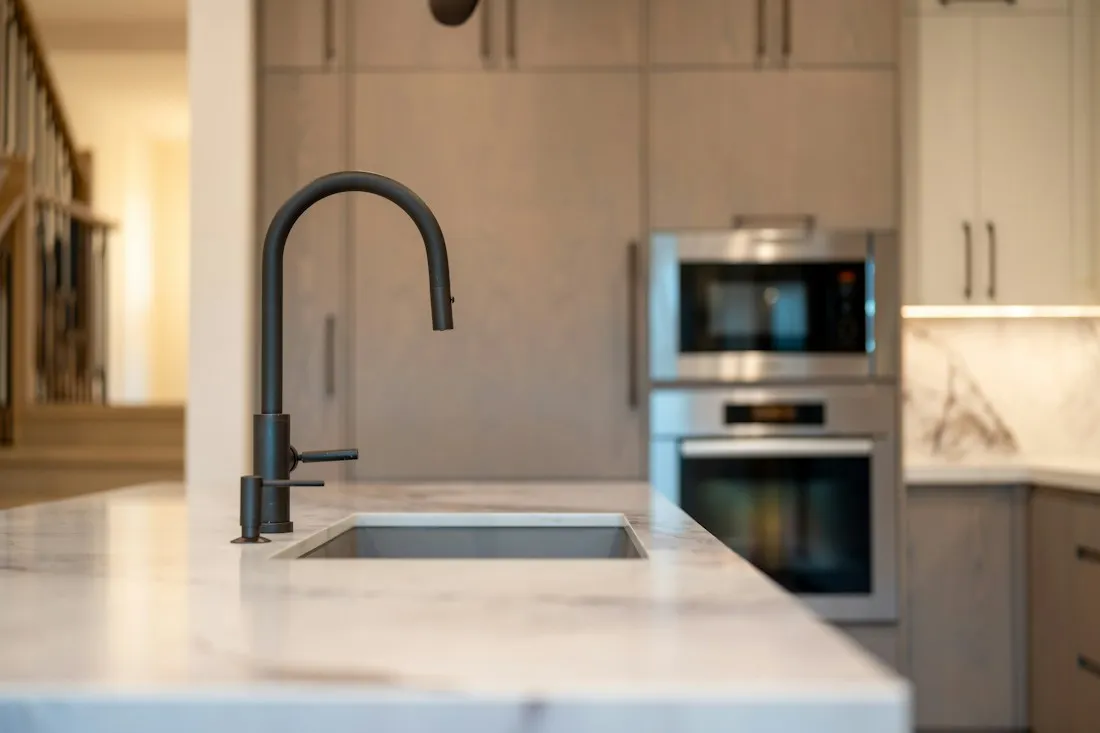
Matte black
Graphic and modern, especially against white stone. Hard water can leave pale marks on it, so wipe it dry.
Bronze
Dark, traditional and warm. Some bronze finishes are designed to wear and show highlights over time.
Care that works for every finish
- Clean with mild soap and water, then dry with a soft cloth.
- Avoid abrasive pads, bleach, vinegar and acidic or ammonia cleaners unless the maker says they're safe.
- Ask whether a finish is PVD. PVD finishes are among the most durable for daily use.
Mixing finishes
It's fine to mix two finishes, for example brass faucets with black hardware. Keep each fixture group (faucet, pot filler, soap dispenser) in the same finish.
Sources
Planning a kitchen or bath?
Send us your measurements and photos, and we will confirm fit and finish before you order.
Request a Quote


